Applying Bayesian Predictive Modeling to Consumer Conversion
Bayesian analysis provides an opportunity for Interparfums to strengthen its marketing forecasts by updating probability estimates as new campaign information becomes available. Unlike traditional approaches that rely on a single fixed estimate, Bayesian inference combines prior assumptions with observed evidence to develop updated probability distributions (Gelman et al., 2013).
For this scenario, Interparfums wants to estimate the probability that a consenting consumer makes a purchase after receiving a promotional fragrance offer.
Bayes’ theorem is expressed as:
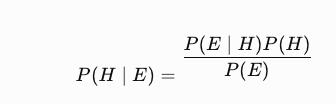
Where H represents a hypothesis and E represents observed evidence.
For the conversion-rate model, a beta-binomial approach is appropriate because each consumer has two possible observed outcomes: purchase or no purchase.
Establishing the prior probability
The prior expected conversion rate is:
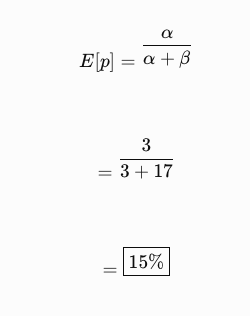
This 15% estimate represents an assumed starting point rather than a documented Interparfums conversion rate.
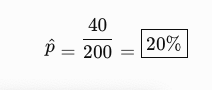
Next, suppose a promotional pilot reaches 200 consenting consumers, of whom 40 make a qualifying purchase.
The observed conversion rate is:
Updating the posterior distribution
The beta distribution is conjugate to the binomial likelihood, meaning the posterior distribution remains a beta distribution after the new observations are incorporated (Gelman et al., 2013).
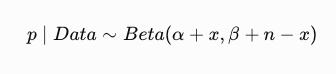
Substituting the hypothetical data:
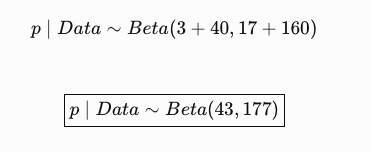
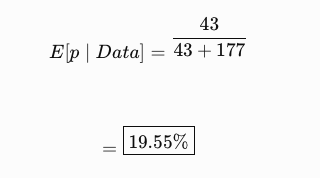
The posterior expected conversion rate is:
Bayesian conversion-rate update
Original visualization comparing the hypothetical prior mean, observed pilot conversion, and posterior mean.
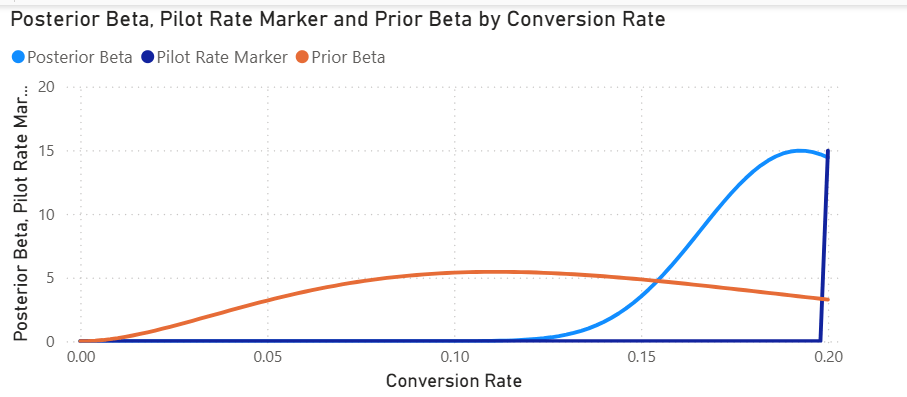
Figure 6. Original Bayesian forecast summary. These three values are distinct statistical quantities; the connecting line illustrates the update sequence rather than a continuous time trend.
The posterior estimate of 19.55% is higher than the original 15% prior mean but slightly lower than the observed 20% pilot conversion rate. This demonstrates how Bayesian analysis incorporates new evidence without completely discarding prior assumptions.
For a future campaign involving 1,000 comparable consenting consumers:
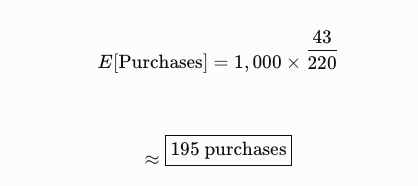
This estimate represents an expected outcome rather than a guaranteed number of purchases. Actual performance could vary because of consumer preferences, seasonality, promotional design, economic conditions, and uncertainty in the conversion probability.
Applying Bayesian analysis to business decisions
Interparfums could use Bayesian modeling to compare promotional performance across customer segments and update forecasts after each campaign period. For example, the company could estimate whether luxury fragrance enthusiasts have a higher conversion probability than first-time fragrance explorers and use these findings to inform future advertising allocations.
The model could also be extended to evaluate alternative promotional strategies, such as fragrance discovery gifts, percentage discounts, or exclusive product previews. Posterior distributions would allow decision-makers to consider not only expected conversion rates but also uncertainty surrounding those estimates.
To support larger datasets, Interparfums could integrate campaign registration records, consented customer interactions, purchasing information, and promotional channel data into a centralized analytical environment. Python could perform the Bayesian calculations, while Power BI could display conversion trends, posterior estimates, and performance comparisons.
However, predictive models introduce risks related to incomplete records, duplicate entries, privacy restrictions, unrepresentative samples, and inappropriate prior assumptions. NIST (n.d.) emphasizes the importance of understanding statistical methods and their assumptions when interpreting analytical results.
Business recommendation: Interparfums should implement Bayesian analysis through a limited promotional pilot before scaling to larger campaigns. Updated conversion estimates, acquisition costs, and contribution margins should be evaluated together so that predictive insights translate into financially responsible marketing decisions.
Overall Strategic Recommendation
The proposed Global Fragrance Discovery Sweepstakes demonstrates how Interparfums could extend its existing business intelligence capabilities beyond financial ratio analysis into consumer engagement, promotional performance, and predictive marketing.
Across the five analyses, descriptive statistics establish the customer baseline, cross-tabulation reveals differences among consumer segments, statistical inference evaluates sampling discrepancies, probability distributions support fair promotional selection, and Bayesian modeling provides updated conversion forecasts.
These techniques address different aspects of business decision-making. Statistical inference helps determine whether observed patterns may reflect more than random variation, while Bayesian modeling provides a framework for updating predictions as new evidence becomes available. Together, they can help Interparfums make more informed decisions under uncertainty.
The hypothetical campaign also demonstrates the importance of balancing financial opportunities with operational and legal risks. Although the projected 200% ROI suggests potential profitability, the estimate depends on assumptions about consumer participation, incremental purchases, and contribution margins. Similarly, the Bayesian conversion estimate of 19.55% provides a planning benchmark rather than a guaranteed result.
I recommend that Interparfums begin with a controlled pilot, establish standardized data definitions, and use Power BI to monitor customer participation, promotional fairness, acquisition costs, conversion rates, and incremental financial contribution. This approach would allow leadership to evaluate the campaign’s effectiveness before committing additional resources.
Ultimately, the value of BIA is not limited to producing dashboards or calculating probabilities. Its strategic importance comes from translating statistical evidence into actionable recommendations that improve decision-making, reduce uncertainty, and support sustainable business performance.
References
Gelman, A., Carlin, J. B., Stern, H. S., Dunson, D. B., Vehtari, A., & Rubin, D. B. (2013). Bayesian data analysis (3rd ed.). CRC Press. https://sites.stat.columbia.edu/gelman/book/
Montgomery, D. C., & Runger, G. C. (2018). Applied statistics and probability for engineers (7th ed.). Wiley.
National Institute of Standards and Technology. (2003). NIST/SEMATECH e-handbook of statistical methods.https://doi.org/10.18434/M32189


Leave a Reply