Recommended Initial Market: Mumbai Metropolitan Region
A phased Indian expansion requires geographic prioritization. Mumbai Metropolitan Region (MMR) represents a defensible initial test market for an Interparfums prestige-fragrance expansion because of the concentration of premium consumers, luxury retail infrastructure, retail activity, global connectivity, and access to established digital commerce.
Retail data provide measurable support. Mumbai led retail-space take-up among Indian Tier I cities during the first half of 2025. Mumbai, Hyderabad, and Bengaluru collectively represented approximately 59% of total retail-space absorption, while luxury retailers represented approximately 11% of leasing activity across the market analyzed by CBRE (CBRE, 2025). Mumbai also contains established luxury destinations capable of supporting prestige-brand positioning.
Affluence indicators provide additional evidence. Mumbai remained India’s most expensive luxury residential market during 2025, and luxury property activity demonstrates a substantial concentration of high-net-worth consumption and investment (Knight Frank, 2026). Such evidence does not directly measure fragrance demand, but affluence, premium retail infrastructure, and luxury consumption provide useful proxy variables when evaluated alongside beauty-market data.
Mumbai should not automatically receive all expansion resources. Delhi-NCR and Bengaluru represent important comparison markets. North India represented approximately 31% of the Indian perfume market in 2025 according to one industry estimate, supported partly by Delhi-NCR purchasing power and premium retail infrastructure (IMARC Group, 2026). Bengaluru also demonstrates strong premium-market development associated with technology-sector wealth and rising luxury demand. The three metropolitan areas therefore provide logical candidates for a controlled geographic test.
Proposed Geo-Analytical Model
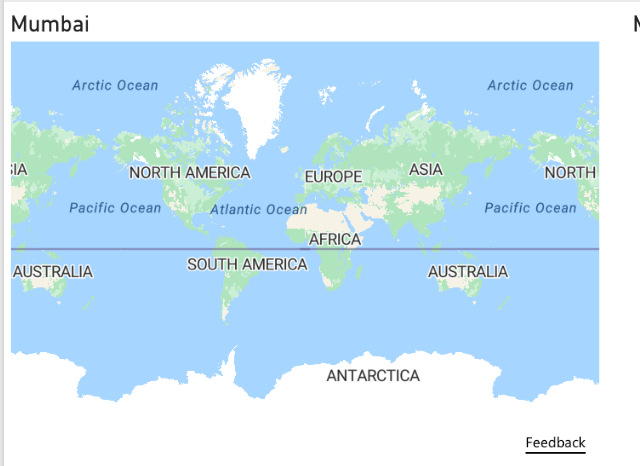
A Power BI bubble map can compare selected metropolitan areas using a Market Opportunity Index. Each location can receive a composite score based on measurable variables:
Market Opportunity Index = Affluence + Premium Retail Access + Digital Commerce Potential + Population/Demand + Distribution Feasibility
The map should include Mumbai, Delhi-NCR, Bengaluru, Hyderabad, Chennai, Pune, and Kolkata. Bubble size can represent the calculated market-opportunity score, while tooltips can display population, premium-retail indicators, estimated demand, projected sales, and channel availability.
Mumbai can serve as the initial pilot location, while Delhi-NCR and Bengaluru can function as comparison markets during subsequent expansion phases. Actual pilot results should determine broader deployment rather than relying solely on initial market estimates.
The proposed geographic strategy therefore follows a test → measure → refine → expand BIA model. A Mumbai pilot would generate actual Interparfums-specific data on fragrance preferences, pricing, digital conversion, retail performance, repeat purchases, and inventory movement. Business intelligence from the pilot could then determine whether Delhi-NCR, Bengaluru, or another metropolitan market provides the strongest second-stage expansion opportunity.
Conclusion: From Market Size to Market Intelligence
India presents a measurable growth opportunity for Interparfums, but market size alone cannot justify expansion. Current evidence demonstrates growth in beauty consumption, premiumization, fragrance demand, luxury retail, and digital commerce. Current evidence also demonstrates substantial competition and existing Interparfums distribution challenges within India.
A controlled Mumbai market pilot supported by an entry-level prestige discovery strategy provides a data-driven method for testing the opportunity. Quantitative demand distributions, geographic analysis, consumer conversion metrics, and forecast-error monitoring can transform the expansion decision from an assumption about a growing country into a measurable BIA process.
The strongest expansion strategy therefore depends on continuous data collection. Market entry generates observations; observations generate business intelligence; business intelligence supports subsequent expansion decisions.
References
CBRE. (2025, July 28). India retail figures H1 2025. https://www.cbre.co.in/insights/figures/india-retail-figures-h1-2025
Grand View Research. (2025, November 11). India perfume market size & outlook, 2025–2030. https://www.grandviewresearch.com/horizon/outlook/perfume-market/india
McKinsey & Company. (2025, June 9). State of beauty 2025: Solving a shifting growth puzzle. https://www.mckinsey.com/industries/consumer-packaged-goods/our-insights/state-of-beauty-2025


Leave a Reply