Evaluating Consumer Reputation Through Conditional Probability and Statistical Inference
Sampling is an important component of business intelligence because organizations cannot always collect information from every potential consumer.However, the usefulness of a sample depends on how accurately it represents the larger population. According to the National Institute of Standards and Technology (NIST, n.d.), sampling allows analysts to make inferences about populations while considering sample size, variability, and representativeness.
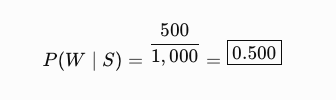
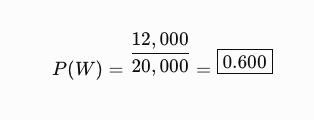
For this scenario, assume Interparfums identifies a hypothetical eligible prospect population of 20,000 consumers, consisting of 12,000 women and 8,000 men. The marketing sample developed in Blog 2 contains 1,000 consumers, equally divided between women and men.
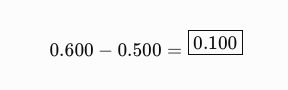
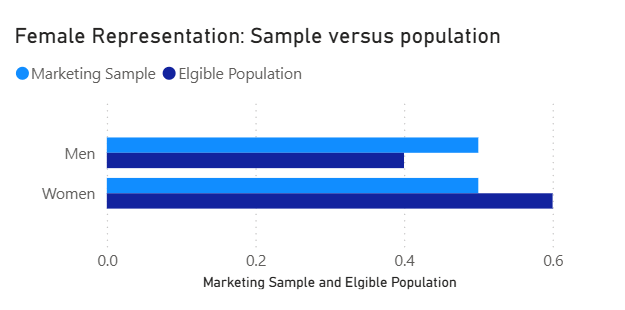
This creates a potential representation concern because women account for 60% of the eligible prospect population but only 50% of the marketing sample.
Marginal and Conditional Probability Calculations
The probability that a random selected individual from the marketing sample is a woman is:
The probability that a randomly selcted individual from the elgible prospect population is a woman is:
Therefore, the different between the two proportions is:
Female representation: Sample versus population
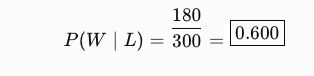
Conditional probability can provide additional insight into the differences between customer segments. Among luxury fragrance enthusiasts, the probability of selecting a woman is:
Among first-time fragrance explorers:
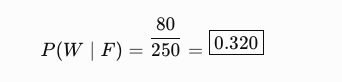
These results demonstrate that women represent 60% of luxury fragrance enthusiasts but only 32% of first-time fragrance explorers in the hypothetical sample. This variation suggests that different purchasing motivations may be associated with different demographic distributions, although the data do not establish a causal relationship.
Statistical inferecne and hypothesis testing
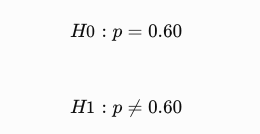
To evaluate whether the overall sample discrepancy could reasonably result from random variation, Interparfums could conduct a one-sample proportion z-test.
The null and alternative hypotheses are:
Using the sample proportion of 0.50 and sample size of 1,000:
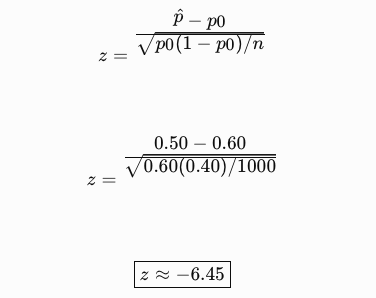
Under a conventional significance level of 0.05, this result would lead to rejection of the null hypothesis, assuming the sample was randomly selected and the test assumptions were satisfied. Because the hypothetical population is finite and the sampling fraction is 5%, a finite-population correction could also be considered; it would not change the conclusion.
However, statistical significance does not automatically establish discrimination. The difference could reflect advertising placement, recruitment methods, participation preferences, nonresponse, or other factors. NIST (n.d.) emphasizes that sample observations should not automatically be treated as population facts without considering sampling uncertainty and representativeness.
From a BIA perspective, Interparfums should investigate whether particular promotional channels are disproportionately reaching or excluding customer groups. For example, advertising concentrated on a limited number of social media platforms could generate a sample that differs from the broader eligible population.
Business recommendation: Interparfums should adopt a stratified sampling strategy where appropriate, evaluate response rates across consumer segments, and use Power BI to monitor differences between sample composition and population benchmarks. This would strengthen the reliability of subsequent marketing forecasts and reduce the risk of making decisions based on unrepresentative data.
References
Heckert, N. A., & Filliben, J. J. (2003). NIST/SEMATECH e-handbook of statistical methods: Chapter 1, exploratory data analysis. National Institute of Standards and Technology. https://www.nist.gov/publications/nistsematech-e-handbook-statistical-methods-chapter-1-exploratory-data-analysis
Montgomery, D. C., & Runger, G. C. (2018). Applied statistics and probability for engineers (7th ed.). Wiley.
National Institute of Standards and Technology. (2003). NIST/SEMATECH e-handbook of statistical methods.https://doi.org/10.18434/M32189


Leave a Reply