Strategic Capacity Expansion Through Expected Monetary Value and Predictive Analytics
Interparfums, Inc. operates within the global prestige fragrance industry, managing a diversified portfolio of liscenced and properiertary fragrance brands across international markets. The company’s global operations require coordination among manufacturing partners, suppliers, distribution networks, retailers and marketing organizations. In fiscal year 2025, Interparfums generated approximately $1.49 billion in consolidated net sales, demonstrating the operational scale necessary to support international fragrance demand (Interparfums Inc., 2026).
As Interparfums evaluates future growth opportunities, executive leadership must determine whether existing operational capacity can accommodate increased consumer demand. Potential strategies include expanding current facilities, leasing additional distribution space, investing in automation, or constructing new infrastructure. Each alternative presents different capital requirements, operating expenses, and exposure to market uncertainty.
A critical consideration involves the duration of anticipated demand. Prestige fragrance sales may fluctuate because of seasonal purchasing, consumer preferences, economic conditions, and competitor activity. Consequently, capacity expansion decisions should incorporate historical sales patterns, demand forecasts, and financial risk assessments rather than relying exclusively on recent revenue growth.
Decision Analysis Under Certainty, Uncertainty, and Risk
Business intelligence analytics provides a structured framework for evaluating capacity decisions under different levels of information availability.
Under certainty, management evaluates alternatives using known outcomes, such as established equipment costs or contracted lease expenses. Under uncertainty, the probabilities associated with future demand conditions are unknown, requiring decision criteria such as maximin, maximax, or minimax regret. Under risk, estimated probabilities can be assigned to potential outcomes, allowing quantitative techniques such as Expected Monetary Value (EMV).
EMV calculates the probability-weighted financial outcome associated with each strategic alternative (Montgomery & Runger, 2018).
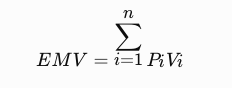
The following hypothetical model evaluates four capacity strategies across high-, moderate-, and low-demand conditions. The payoffs represent illustrative three-year incremental net cash benefits after strategy-specific costs, expressed in millions of dollars.
Table 1. Illustrative Capacity Expansion Decision Matrix
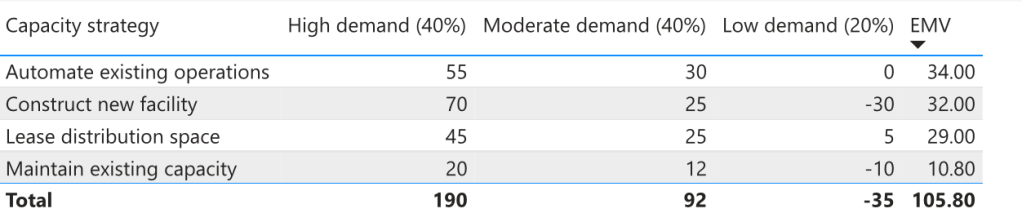
Note. All probabilities, payoffs, and expected values are hypothetical analytical assumptions, not reported company projections.
For automation:
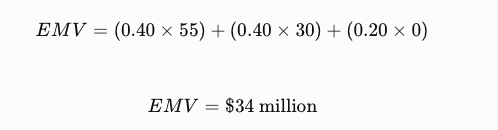
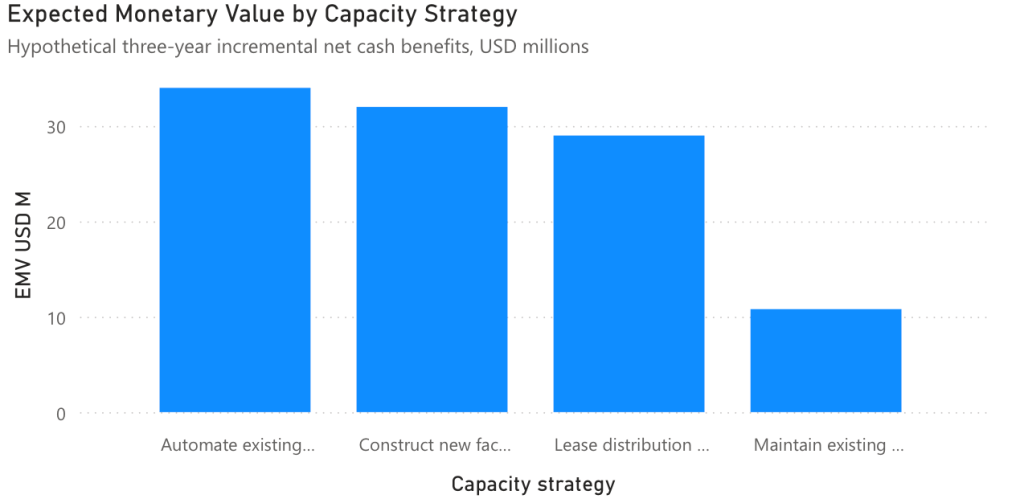
The results indicate that automation generates the highest expected monetary value under the assumed demand probabilities. However, the $2 million difference between automation and facility construction suggests that modest changes in assumptions could alter the preferred alternative.
Expected Monetary Value Comparison
Decision Tree Analysis
A decision tree provides an additional visual framework for comparing capacity investments under different market conditions.
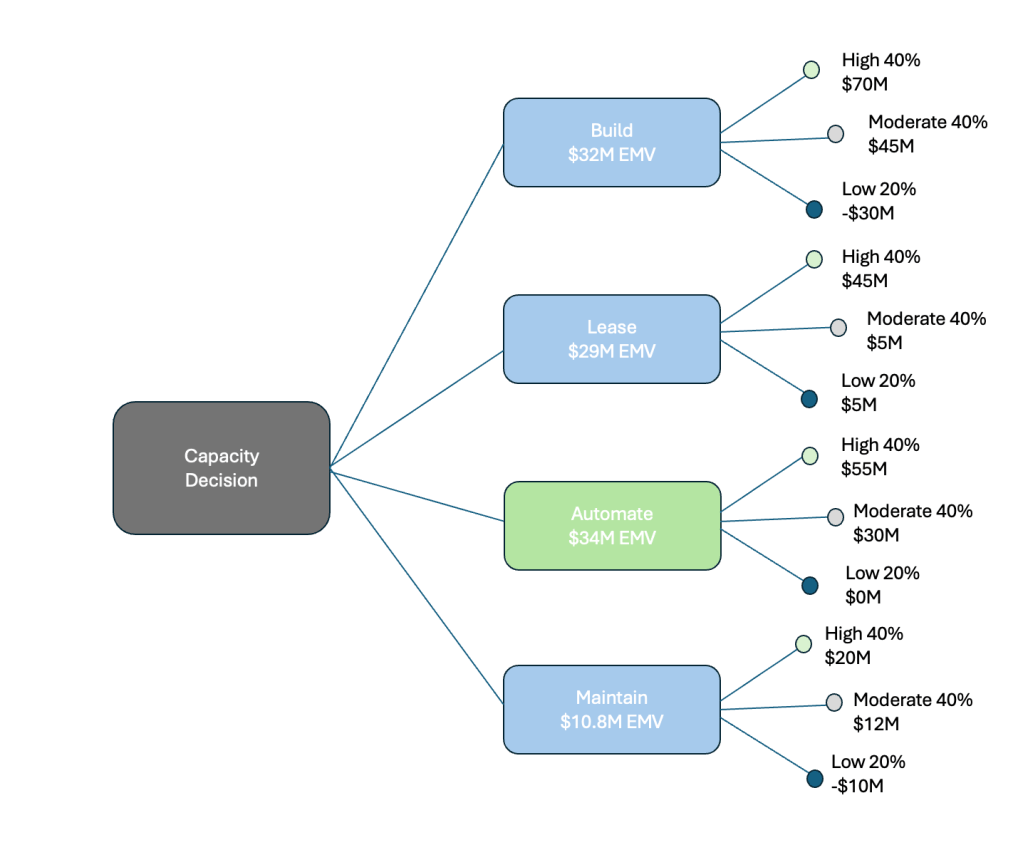
Note. Created by the author in PowerPoint.
Forecasting and Risk Management
Interparfums could incorporate time-series forecasting, regression analysis, and Monte Carlo simulation to evaluate the probability of future capacity shortages.
A Monte Carlo model could generate 10,000 hypothetical demand and cost outcomes using probability distributions estimated from historical operational data. The simulation would allow management to examine expected returns, downside losses, and the probability of insufficient capacity.
OLAP analysis could further support capacity planning by allowing management to evaluate demand across brand, geographic market, distribution channel, and reporting period.
Forecast accuracy should be monitored through Mean Absolute Percentage Error (MAPE) and Root Mean Squared Error (RMSE). Prediction intervals should also be reported to communicate uncertainty in future demand estimates.
Executive Recommendation
Interparfums should prioritize selective automation and flexible distribution arrangements before committing to major permanent facility construction. The hypothetical EMV analysis favors automation, while the company’s international operating structure supports a scalable approach to capacity planning.
Quarterly demand forecasts, inventory availability, capital expenditures, and capacity utilization should serve as executive decision indicators. Permanent expansion should proceed only when sustained demand and favorable risk-adjusted returns justify additional capital commitments.
References
Inter Parfums, Inc. (2026). Annual report for the fiscal year ended December 31, 2025 (Form 10-K). U.S. Securities and Exchange Commission. https://www.sec.gov/Archives/edgar/data/822663/000175392626000464/ipar-20251231.htm
Montgomery, D. C., & Runger, G. C. (2018). Applied statistics and probability for engineers (7th ed.). Wiley.


Leave a Reply